
Pet Diagnostic Imaging: What Miami Pet Owners Should Expect

Pet Diagnostic Imaging: What Miami Pet Owners Should Expect
If your dog or cat needs advanced diagnostics, you may be wondering what to expect from pet diagnostic imaging and how this process works in Miami. Veterinary medicine has come a long way, and today’s pet owners have access to sophisticated tools like CT scans and fluoroscopy—not just at specialty hospitals, but right in the comfort of their local veterinary clinic. At Mobile Pet Imaging, our mobile team brings state-of-the-art pet diagnostic imaging to clinics and homes throughout 12968 Southwest 132nd Avenue, Miami, FL, making the process more accessible and stress-free for your pet. In this article, we will walk you through when your pet might need advanced imaging, what the process involves, and how our mobile approach ensures convenience and top-quality care every step of the way.
Whether your veterinarian has recommended a CT scan to diagnose an unexplained limp, or you are searching for answers about your pet’s internal health, understanding pet diagnostic imaging can help ease your worries. We will cover how imaging supports your pet’s health, what to expect before, during, and after the appointment, and why mobile imaging can be the ideal solution for many Miami pet owners. If you are curious about the details, you can also explore our visual guide explaining CT scans for pet owners for a helpful overview.
When Does Your Pet Need Diagnostic Imaging?
Pet diagnostic imaging becomes essential when your dog or cat is experiencing symptoms that cannot be fully evaluated with a standard physical exam or basic lab tests. Common situations include ongoing lameness, neurological issues such as sudden weakness or seizures, unexplained pain, or persistent coughing, sneezing, or digestive trouble that does not improve with initial treatment. Your veterinarian may also recommend advanced imaging to investigate abnormal blood work, monitor the progression of a known disease, or plan for complex surgeries, especially involving the head, neck, or joints.
For example, if your dog has been limping for several weeks despite rest and medication, your veterinarian may suspect a torn ligament or bone abnormality that is not visible on X-rays. In these cases, a CT scan can provide detailed three-dimensional images of bones and soft tissues, helping pinpoint the problem so your veterinarian can create the most effective treatment plan. Similarly, cats with chronic nasal discharge or neurological symptoms may benefit from a CT scan to identify tumors, infections, or other underlying conditions.
Understanding the Causes: Why Advanced Imaging Is Needed
Many pet health conditions cannot be fully diagnosed with a physical exam alone. While traditional X-rays and ultrasounds are valuable, they have limitations. X-rays are excellent for showing bones, but they often miss subtle changes in soft tissues or overlapping structures. Ultrasound is helpful for viewing soft tissue organs, but it cannot provide the cross-sectional detail needed for certain conditions, especially inside the head or spine.
This is where pet diagnostic imaging with CT scans and fluoroscopy comes in. CT scans use advanced computer technology to create detailed cross-sectional images of your pet’s body. These images reveal abnormalities in bones, joints, organs, and even blood vessels, providing clarity for complex issues like fractures, tumors, dental disease, and neurological concerns. Fluoroscopy, on the other hand, offers real-time moving X-rays, making it especially useful for evaluating dynamic processes like swallowing, airway function, or joint movement.
Certain breeds and ages are more prone to conditions that benefit from advanced imaging. Older pets may develop tumors, arthritis, or dental problems that require a closer look. Brachycephalic breeds (those with short noses, like Bulldogs or Persians) are at higher risk for airway and dental issues, while young, active dogs may suffer orthopedic injuries that need precise diagnosis. If you are interested in understanding the differences between imaging techniques, our comparison of CT scans and ultrasound for evaluating elevated liver enzymes in pets offers additional insights.
What Happens During Mobile Pet Diagnostic Imaging?
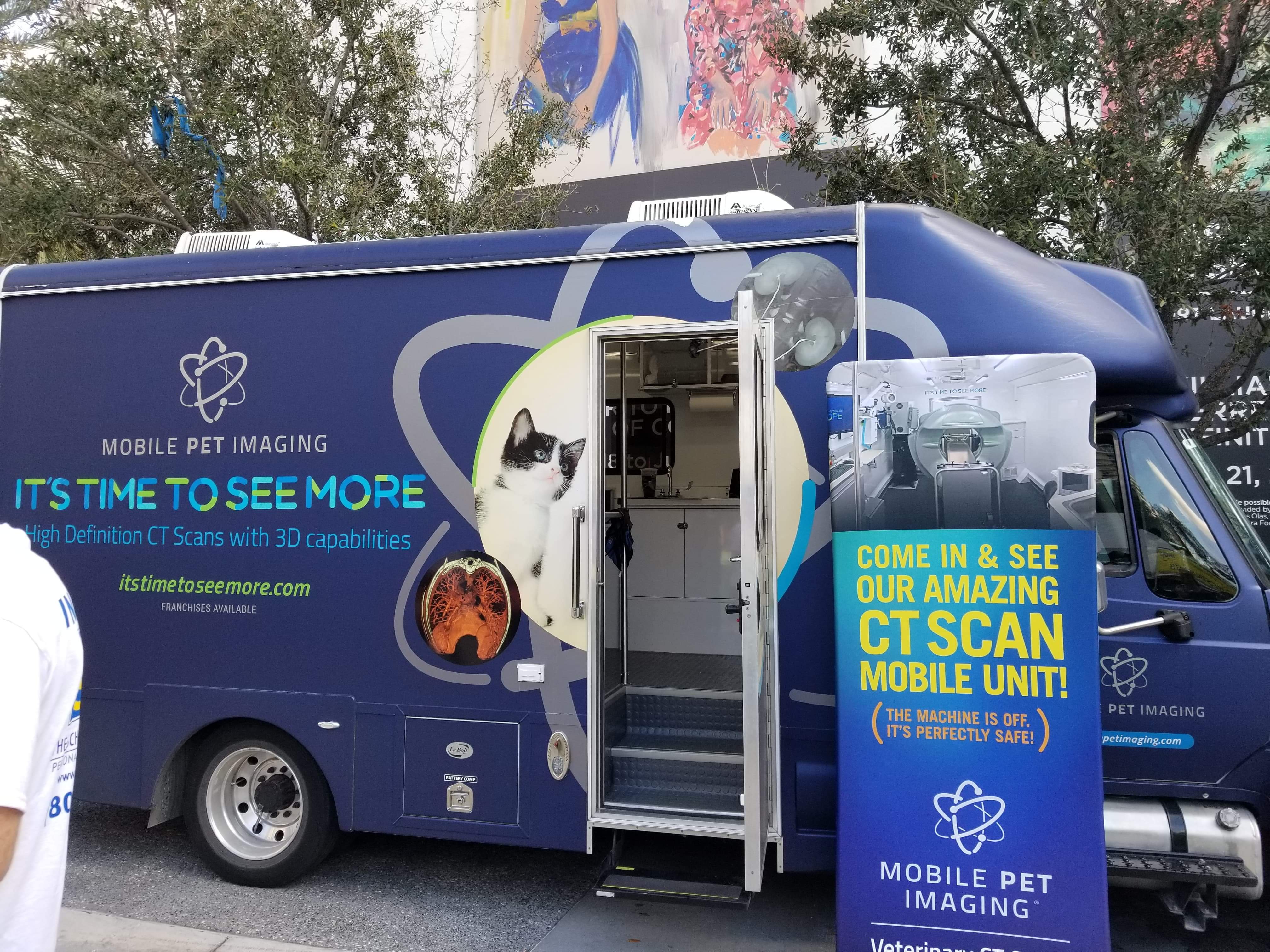
At Mobile Pet Imaging, we prioritize your pet’s comfort and your peace of mind by delivering advanced imaging services directly to your veterinarian’s clinic or, in some cases, your home. This mobile approach is especially helpful for pets who are anxious about car rides or new environments, as it minimizes stress and disruption to their routine.
The Process Step-by-Step
Once your veterinarian determines that your pet would benefit from advanced imaging, they will coordinate with our team to schedule your pet’s appointment. We work closely with your regular veterinary clinic to ensure seamless communication and care. On the day of imaging, your pet will be admitted at the clinic or, in select cases, prepared for imaging at home.
Most CT scans and fluoroscopy procedures require light sedation or anesthesia to keep your pet still and comfortable during the imaging process. This is both for safety and to ensure the best-quality images. Our veterinary professionals are highly trained to monitor your pet throughout the procedure, paying close attention to their vital signs and comfort.
The imaging itself is typically quick, with most scans completed within 30 to 60 minutes. Our equipment is compact and designed for mobile use, but it delivers the same high-quality results as those found in major veterinary hospitals. After the scan, your pet will be monitored until fully awake, and most pets are ready to go home the same day.
Images are reviewed by board-certified veterinary radiologists, and a detailed report is sent to your veterinarian within a short timeframe. This allows your primary veterinarian to discuss the findings with you and create an appropriate treatment plan, whether it involves surgery, medication, or additional diagnostics. For more details about the types of services we provide, you can visit our overview of veterinary diagnostic imaging services for pets.
Preparing Your Pet for Imaging: Tips for a Smooth Experience
To make the imaging process as safe and stress-free as possible, your veterinary team will provide instructions tailored to your pet’s needs. In most cases, pets should not eat for several hours before sedation or anesthesia; your veterinarian will let you know the exact fasting period based on your pet’s age, health, and the type of procedure. Water may be allowed up until a certain time.
If your pet takes regular medication, ask your veterinarian whether you should give the usual dose on the day of the procedure. Bring any medical records, previous X-rays, or lab results that may help the imaging team understand your pet’s condition. If your pet is especially anxious, let the veterinary team know in advance so they can make special accommodations.
After imaging, your pet may be a bit groggy for a few hours. Provide a quiet, comfortable space at home for recovery, and follow all post-procedure instructions from your veterinarian. Most pets return to their normal selves quickly, but do not hesitate to call your veterinary team if you have any concerns.
How Pet Diagnostic Imaging Improves Health Outcomes
Advanced imaging is more than just pictures—it is a powerful diagnostic tool that can make all the difference in your pet’s health. By providing clear, precise images, CT scans and fluoroscopy allow veterinarians to detect problems earlier, plan surgeries more accurately, and avoid unnecessary procedures. For dental disease, a CT scan can reveal hidden tooth root abscesses or bone loss that is invisible on standard X-rays. In cases of cancer, imaging helps determine the size and spread of tumors, guiding the most effective treatment.
Additionally, real-time imaging with fluoroscopy can diagnose swallowing disorders or airway obstructions that may otherwise go undetected. For pets with chronic ear infections, neurological issues, or unexplained pain, advanced imaging can shorten the time to diagnosis and help your pet feel better sooner. If you want to explore the role of CT scans in more detail, our information about CT scans for pets explains how this technology can support your pet’s care.
Frequently Asked Questions About Pet Diagnostic Imaging
Many pet owners have questions about the safety, cost, and logistics of advanced imaging. Is it safe for my pet? Will my pet need anesthesia? How long does it take to get results? Our veterinary professionals are committed to answering all your questions and making the process as transparent as possible. For a comprehensive list of frequently asked questions and answers, we encourage you to visit our FAQ page about Mobile Pet Imaging and veterinary diagnostic procedures.
In general, diagnostic imaging is considered very safe when performed by experienced veterinary teams. The risks associated with sedation are low, especially when pets are properly screened beforehand. The benefits of accurate diagnosis and targeted treatment typically far outweigh the small risks involved.
When to Seek Diagnostic Imaging for Your Pet
If your pet is experiencing ongoing symptoms such as limping, unexplained pain, difficulty breathing, seizures, or a sudden change in behavior, it is important to consult with your veterinarian promptly. Your veterinarian will perform a thorough physical exam and may recommend advanced imaging if they suspect an underlying issue that cannot be diagnosed through routine means.
Never wait to seek help if your pet is in distress or their symptoms are rapidly worsening. Early intervention can make a significant difference in outcome, especially for conditions involving the brain, spinal cord, or internal organs. The sooner a diagnosis is made, the more options are available for effective treatment.
Why Choose Mobile Pet Imaging in Miami?
Choosing Mobile Pet Imaging means bringing world-class technology to your local veterinary clinic or even your doorstep. For Miami pet owners, this mobile approach offers convenience, reduced stress for your pet, and faster access to answers. Our mobile veterinary professionals partner with your regular veterinarian to provide seamless, compassionate care—every step of the way.
We proudly serve Miami and surrounding communities, making advanced imaging accessible for pets throughout the region. With experienced imaging specialists and a commitment to clear communication, we ensure your pet receives the highest standard of diagnostic care without the need for long-distance travel or unfamiliar hospital settings.
Take the Next Step for Your Pet’s Health
If your veterinarian has recommended advanced imaging, or if you are searching for a "mobile vet near me" who can provide pet diagnostic imaging with exceptional convenience, Mobile Pet Imaging is here to help. Our team is dedicated to making the process as smooth and stress-free as possible, while delivering the answers your pet needs for the best possible care. To learn more or to schedule a mobile imaging appointment, contact our veterinary professionals at (305) 733-0673 or visit us at 12968 Southwest 132nd Avenue, Miami, FL. For further reading, explore our overview of veterinary diagnostic imaging services for pets.
Your pet’s health and comfort are our highest priority. When you need pet diagnostic imaging in Miami, trust Mobile Pet Imaging to bring expertise, technology, and compassionate care right to your local veterinary clinic or home.