
CT Scans
Case Studies
8.5 Year Old German Shepherd Suffering with Nose Pain


Overview
Signalment and History
Patient is a 8.5 yr old, MN, German Shepherd that presented with a 2-week history of pain when moving the rostral end of the nose. Oral exam revealed no abnormalities. A CT scan of the skull was requested to further evaluate the nose/nasal passages and teeth.


Diagnostics Prior to CT Scan
- CBC/Chem: unremarkable
- Radiographs of the skull: within normal limits.
High-Definition CT Scan of the Skull
Patient was anesthetized and a CT scan of the skull was performed. Afterwards, Omnipaque™ (contrast agent) was administer and a post-contrast skull CT scan was acquired.
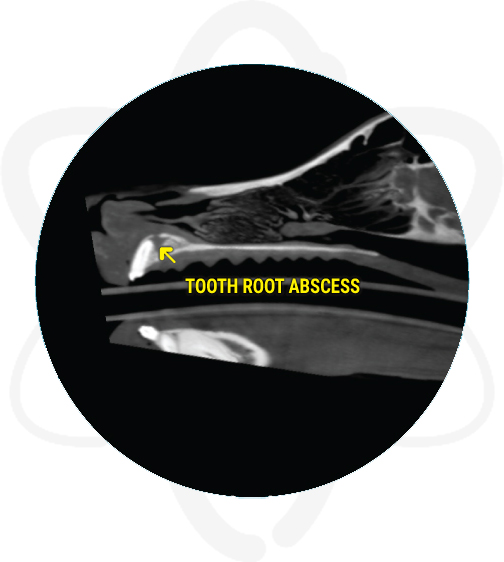
Pertinent Findings from our Board-Certified Radiologist’s Report
- Focal lysis of alveolar bone associated with the right second maxillary tooth root (102). Differentials include tooth root abscess or early neoplasia.
- The remaining skull anatomy is normal.
- There is mild C2-C3 spondylosis deformans.
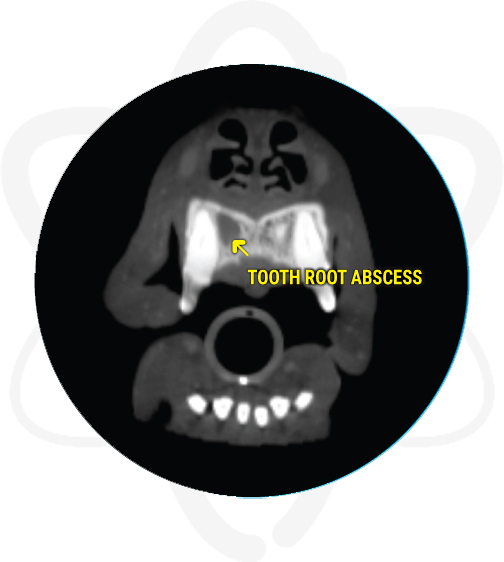
How CT Helped in This Case
CT discovered a reason for the patient’s clinical signs which was not seen on skull radiographs and provided further information for treatment plan.
Benefits of CT in Similar Case
As shown in this case, CT scans are a great imaging modality in the evaluation of the dentition along with the rest of the bony structures of the skull, the nasal passages, soft tissue structures like the eyes, and others. Some of the most common indications for which we perform skull CTs include: chronic nasal discharge, swellings, chronic sneezing, epistaxis, periodontal disease, and middle vs inner ear disease among others.
Multiple studies have been published in the last few years reviewing the usefulness of CT scan in dental disease. The most recent publication from January 2018 (AJVR, Vol 79, No. 1) revealed the following: “The present study revealed that CBCT (Cone Beam CT) provided more detailed and more accurate information than did dental radiography, thereby making CBCT better suited than dental radiography for use in diagnosing dental disorders in brachycephalic dogs”